Why Businesses Need Facility Management | Central Coast
Why Businesses Need Facility Management with SPM Central Coast

Running a business already comes with enough moving parts.
Staff, customers, suppliers and day-to-day operations all demand attention. When you also have a commercial property to look after, maintenance can quickly become another responsibility competing for your time.
A leaking tap might seem minor. A damaged door needs someone to repair it. Gardens need maintaining. Common areas need cleaning. Bins need managing. Then an unexpected leak or building issue requires urgent attention.
Individually, these jobs might not seem significant.
Together, they can create a constant stream of emails, phone calls, quotes, contractors and follow-ups.
This is where professional facility management can help.
Instead of dealing with every property issue separately, facility management creates a coordinated approach to maintaining your workplace or commercial property.
What Does Facility Management Mean for a Business?
Facility management brings together the services required to keep a commercial property safe, functional, presentable and properly maintained.
Depending on the property, this might include:
- Preventative maintenance
- Commercial cleaning
- Building repairs
- general building maintenance
- Painting
- Grounds and garden maintenance
- Pressure cleaning
- Waste and bin management
- Waterproofing and remedial works
- Safety-related maintenance
- Contractor coordination
- Emergency maintenance
The objective isn't simply to have someone available when something breaks.
Effective facility management creates a system for managing both planned and unexpected property requirements.
For businesses, that can mean spending less time coordinating property maintenance and more time concentrating on the operation of the business.
1. Facility Management Reduces the Number of Contractors You Need to Manage
One of the biggest challenges with commercial property maintenance is the number of different people who can become involved.
You might have one company for cleaning, another for landscaping, another for general repairs and additional specialist contractors for jobs such as waterproofing, tiling or fire doors.
Every additional contractor creates another relationship to manage.
There are quotes to request, site access to arrange, work to schedule, emails to answer and completed jobs to follow up.
A facility management provider acts as a central point between the business and these different services.
SPM Central Coast, for example, has its own employees supporting ongoing maintenance contracts as well as a network of more than 20+ trusted specialist contractors for work requiring specific expertise.
Rather than expecting one team to be experts in everything, the right specialist can be coordinated when required.
For the client, the important part is that someone else is overseeing the process.
2. Preventative Maintenance Helps You Stay Ahead of Property Problems
It's easy for building maintenance to become reactive.
Something breaks. Someone reports it. A contractor is called.
While unexpected repairs will always happen, not every maintenance issue needs to reach that point.
Preventative maintenance takes a more proactive approach.
Regular inspections and scheduled maintenance can help identify deterioration and maintenance requirements before they progress further.
This might include signs of:
- Water ingress
- Deteriorating waterproofing
- Damaged surfaces
- Drainage issues
- Loose fixtures
- Wear in high-traffic areas
- External deterioration
- Grounds requiring attention
Preventative maintenance doesn't guarantee that emergencies won't occur.
What it does provide is greater visibility over the condition of the property and an opportunity to address maintenance requirements in a more planned way.
For a busy commercial property, that can make ongoing building maintenance considerably easier to manage.
3. A Well-Maintained Property Creates a Better Environment
Customers, employees, tenants and visitors all experience your property.
The condition of entrances, gardens, common areas, bathrooms, walls, flooring and external spaces contributes to their overall impression of the business.
This is particularly important for properties such as:
- Offices
- Retail premises
- Shopping centres
- Medical centres
- Commercial buildings
- Industrial facilities
- Mixed-use developments
Facility management helps ensure recurring tasks such as cleaning, grounds care, pressure cleaning and general maintenance don't get forgotten when the business becomes busy.
It's about maintaining a professional environment consistently rather than rushing to improve the property immediately before an important meeting, inspection or event.
4. Facility Management Simplifies Day-to-Day Administration
The physical maintenance job is often only one part of the workload.
Consider what can happen when a commercial property develops a problem.
Someone needs to identify the issue.
Then you may need to find a contractor, explain the problem, organise an inspection, receive a quote, obtain approval, arrange site access, communicate with relevant people, schedule the work and check that it has been completed.
That is a lot of administration for one maintenance request.
Now multiply that across an entire commercial property.
Facility management can centralise much of this communication.
Instead of managing multiple conversations, the business or property manager has a clearer point of contact who can oversee the scope, coordinate the appropriate people and follow the job through.
Managing Too Many Contractors?
If your team is spending too much time organising maintenance, cleaning, repairs and specialist trades, it may be worth reviewing how your property is currently being managed.
SPM Central Coast offers a FREE Facility Management Audit for commercial and strata properties across the Central Coast.
We'll look at your current maintenance requirements and identify opportunities to make ongoing property management simpler.
BOOK YOUR FREE FACILITY MANAGEMENT AUDIT →
5. Emergency Maintenance Becomes Easier to Coordinate
Even the best preventative maintenance program can't eliminate every unexpected problem.
Leaks, storm damage, building damage, safety hazards and equipment failures can occur without warning.
When that happens, the last thing a business wants to do is start searching for someone who can help.
An established facility management relationship means there is already a point of contact familiar with the property.
Depending on the issue, they can help coordinate:
- Initial assessment
- Make-safe works
- Emergency maintenance
- Specialist contractors
- Repairs
- Reinstatement works
- Communication and follow-up
The value isn't simply having access to a contractor.
It's having someone responsible for helping coordinate what happens next.

6. Specialist Work Can Be Coordinated Through One Team
Facility management doesn't mean one company physically performs every service.
In fact, some work should only be undertaken by appropriately qualified or licensed specialists.
A facility management provider can coordinate these specialists as part of the wider maintenance requirements of the building.
At SPM Central Coast, this approach combines an internal team for ongoing contracts with a network of more than 20+ specialist contractors.
That network allows niche requirements to be coordinated alongside everyday property maintenance.
For commercial property owners and managers, this can reduce the need to continually search for different suppliers whenever a new requirement arises.
7. Waste, Cleaning and Grounds Can Be Managed Together
Some of the most important property services are also the easiest to overlook because they happen repeatedly.
Bins need to go out.
Common areas need cleaning.
Gardens need maintaining.
External surfaces need cleaning.
Rubbish needs removing.
Instead of treating each as a separate supplier relationship, facility management can bring recurring services into a coordinated maintenance schedule.
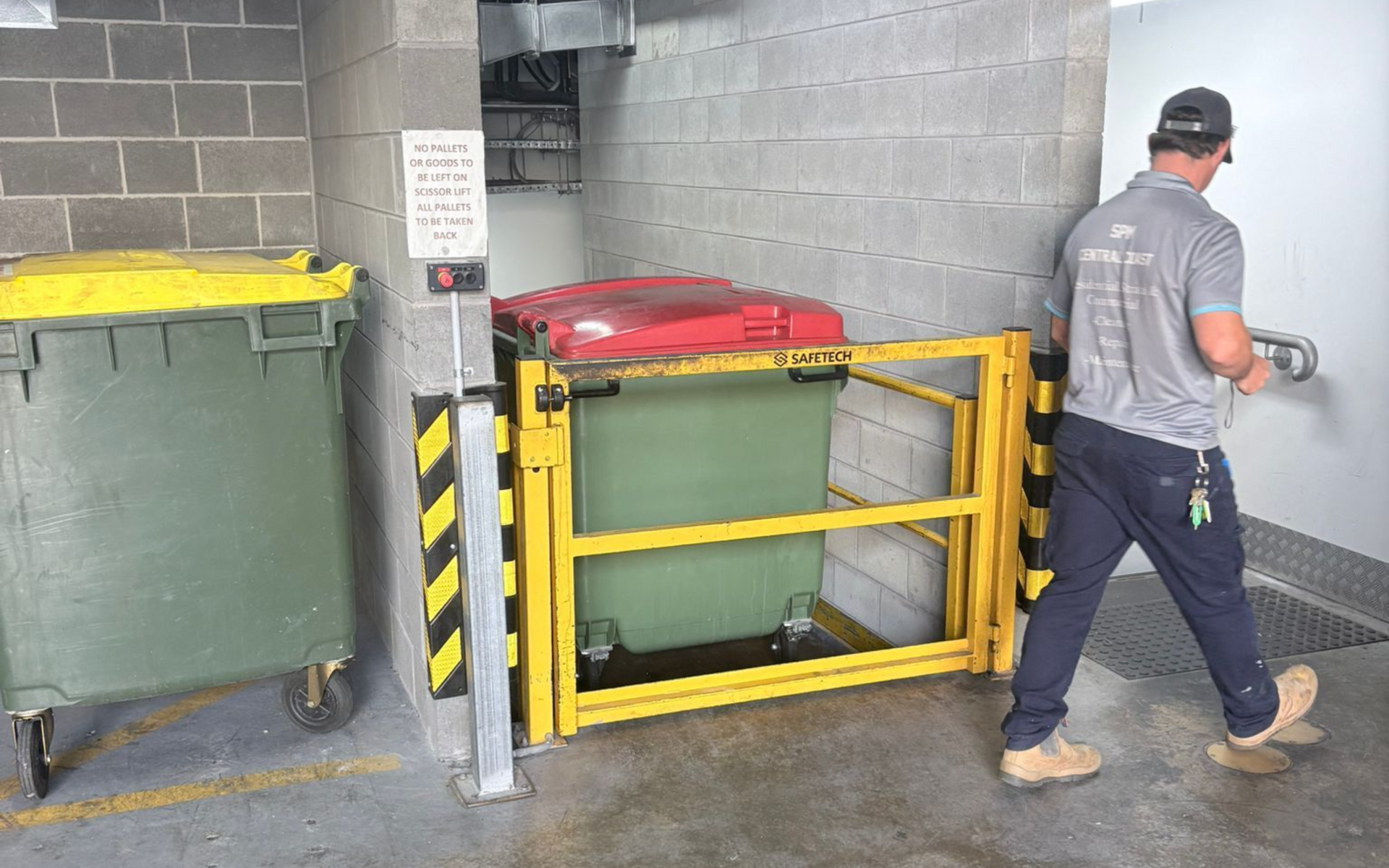
SPM Central Coast's facility management offering can include commercial cleaning, grounds and garden maintenance, pressure cleaning, rubbish removal, bin cleaning and scheduled Green, Yellow and Red bin services.
For businesses with multiple recurring maintenance requirements, having these services coordinated together can simplify ongoing property management considerably.
8. Facility Management Can Scale With the Property
Not every business needs the same level of facility management.
A small commercial office might require regular cleaning, basic maintenance and occasional repairs.
A larger commercial or mixed-use building might require grounds maintenance, waste management, preventative maintenance, contractor coordination, emergency support and ongoing building reporting.
This is why facility management shouldn't necessarily be treated as a fixed package.
The services should reflect:
- Property size
- Building age
- Property type
- Number of occupants
- Usage
- Existing contractors
- Maintenance requirements
- Building assets
- Level of management support required
The goal is to create a maintenance structure appropriate for the property.
Which Central Coast Businesses Can Benefit From Facility Management?
The Central Coast has a diverse commercial property market.
An office building in Gosford or Erina has different requirements from an industrial facility around Tuggerah or Wyong. Likewise, a retail property in Woy Woy or a mixed-use development near Terrigal or The Entrance may have its own combination of cleaning, maintenance and contractor requirements.
Facility management can support:
- Commercial buildings
- Offices
- Retail centres
- Shopping centres
- Industrial facilities
- Medical centres
- Strata properties
- Apartment buildings
- Residential developments
- Mixed-use properties
The question isn't necessarily whether a property is "big enough" for facility management.
A better question is: How much time is currently being spent coordinating the property?
If managing contractors, maintenance requests and recurring services is becoming an ongoing administrative burden, a more coordinated approach may be worthwhile.
What Should a Business Look for in a Facility Management Provider?
Choosing a provider shouldn't simply come down to who offers the longest list of services.
Businesses should understand how those services will actually be managed.
Before engaging a provider, consider asking:
- Will we have one main point of contact?
- How are maintenance requests managed?
- How is preventative maintenance scheduled?
- How are specialist contractors coordinated?
- What reporting will we receive?
- Can existing contractors be incorporated where appropriate?
- What happens when an urgent problem occurs?
- Can services change as our property requirements change?
The best arrangement should reduce administration rather than create more of it.
Frequently Asked Questions About Commercial Facility Management
What does a facility manager do for a business?
A facility manager helps coordinate the ongoing maintenance and operational requirements of a property. This can include cleaning, repairs, grounds care, waste management, preventative maintenance, contractors and emergency maintenance.
Is facility management only for large commercial buildings?
No. The appropriate level of facility management depends on the complexity and requirements of the property rather than simply its size.
What is the difference between facility management and commercial property maintenance?
Commercial property maintenance generally refers to the physical maintenance and repair work being completed. Facility management takes a broader approach by coordinating those services and the property's ongoing maintenance requirements.
Can a facility manager organise specialist contractors?uestion
Yes. Contractor coordination is commonly part of facility management. Specialist or licensed contractors can be engaged when a property requires expertise outside the everyday maintenance team.
What is preventative maintenance?
Preventative maintenance involves planned inspections and maintenance intended to identify building requirements and deterioration before issues progress further.
Can facility management include commercial cleaning?
Yes. Cleaning, grounds maintenance, pressure cleaning and waste management can all form part of a wider facility management program.
Can facility management include emergency maintenance?
Yes. Depending on the provider and agreement, facility management can include support for urgent building issues, make-safe works and coordination of emergency repairs.
Find Out Where Your Property Management Could Be Simplified
If you're running a business or managing a commercial property, you shouldn't have to spend unnecessary time chasing cleaners, maintenance teams and specialist contractors.
Sometimes the easiest way to identify opportunities is to take a fresh look at how the property is currently being managed.
SPM Central Coast offers a FREE Facility Management Audit for commercial and strata properties across the Central Coast.
As part of the audit, we can review areas such as:
- Current maintenance arrangements
- Preventative maintenance opportunities
- Commercial cleaning
- Grounds and external areas
- Waste and bin management
- Repairs and remedial requirements
- Existing contractor coordination
- Emergency maintenance processes
- Opportunities to consolidate services
One team. One point of contact. Complete property care.
Book Your FREE Facility Management Audit
Call SPM Central Coast on
0428 019 964 or enquire online to arrange your
FREE Facility Management Audit.
Featured Resources
Check Our Latest Resources